Showing posts with label Canadian. Show all posts

Wednesday, April 19, 2023

Old Babes in the Wood - Margaret Atwood

 OLD BABES IN THE WOOD : STORIES


- Margaret Atwood -

First point, which is very exciting to any book reader and library patron...I was the first person to borrow the book from our library. The first hands on a library book! The first fingers to stain the pages b/c I was eating ketchup chips while reading. Isn't that unreal!?

Second point, this book is classic Atwood. By that I mean the writing is superb. I read through this book in a few days, and even though the stories were not my favourite genre or topic, the writing kept me hooked and had me turning the pages .

I knew this book was a collection of stories. I'm okay with that. I like to read a collection of short stories every once in a while. The slight difference with Old Babes in the Wood was that the stories were mostly about the life and times of Tig and Nell. You could describe this book as a novelette about Tig and Nell, with a sprinkling of other short stories placed in between chapters.

I'll cover the majority of the book by saying the Tig and Nell stories were interesting. They seemed to be a look at the life cycle of a long term couple. There is a beginning, a middle age, and then death. It felt to me like Atwood spent a lot of time on the dealing with death, the life of an elder, the waiting for your own death...a lot of space was taken up on life's finale. Perhaps as she ages, Atwood decided it was time to share her perspective, experience, and deep thoughts on The End.

Even though the topic of death, dying, old age, and mourning are not pleasant, invigorating, or something I think about often, Atwood did a great job of keeping my attention. 

The other short stories were a mixed bag, as happens in most short story collections. Some grabbed my attention while others I have already forgotten about. My favourite short was Atwood's interview with George Orwell's ghost. I'm a fan of Orwell & Dystopian books (like the Handmaid's Tale), so I took to it quickly. It was fun too. Not a page full of dense prose, but more of a conversation of casual jokes, awkward pauses, and clever insights.

There was another short story I can recall, about a snail's soul becoming trapped in a human body...yeah, that was an experimental thought that probably didn't need to be published. But, I bet there are some out there that love this kind of stuff. That's what's great about short story collections. The chance for writer's to throw out the weird and wacky, in small doses.

What I felt was missing from the collection was a dystopian type story. My favourite books by Atwood are The Handmaid's Tale, Oryx and Crake...you know? The post apocalyptic / dystopian novels. That's one of the reasons I actually took the book out of the library in the first place. Oh well, can't win them all.

A side note about the title. Not sure if this was a coincidence, but as I was googling 'Old Babes In The Woods' a bunch of results came up about a mysterious murder in Stanley Park (Vancouver). Two girls bodies were found years after they went missing.  

Sunday, April 11, 2021

CORNERED - RON MacLEAN

 CORNERED

Cornered by Ron MacLean and Kristie McLellan Day


- RON MACLEAN -

Ron, the level headed guy opposite Don Cherry on Hockey Night In Canada's Coaches Corner...well, he comes across very level headed in this book. He shares the journey of going from local radio DJ to national sports caster / celebrity.

I read a few of the reviews before diving into this book and I found many were very critical of this book for being bland/boring and implying that Ron is just riding the coat tales (and crazy coats at that) of Don Cherry.

Well obviously the Ron and Don relationship is going go make up most of the stories - they've worked together, hung out together, and have been friends for like 30 years!

Ron's story is not all that exciting, to be truthful. There is no dramatic battle with cancer, fighting out of poverty, drug abuse, or anything like that. Ron seems like a regular old middle class guy who was really into radio and broadcasting. He's a bit of a workaholic who likes to be overprepared for everything he does...so it only makes sense that he would work his way up the chain and become a big name wherever he worked. With his love of hockey it happened to work with Hockey Night in Canada.

He does reveal a bit of his personal life. Again, it's pretty tame. He sounds like a really nice guy who works a lot...so not a whole lot of extras like climbing Kilimanjaro or playing in a folk band.

What I find about these type of books, ghosted by Kristie McLellan Day, is that they lack any flair in the writing and word choice. There is not a lot of literary language being used. It almost feels like a transcript written out from an audio interview. Which is great, in that is really gives you a feel for how someone speaks, the words they use, and the stories they tell...but it also seems choppy at times. But, at least it feels authentic.

Ron MacLean's Cornered

I picked up this book at a local thrift store for $1. There were a huge pile of biographies that someone had just dropped off. All in great shape, probably read once, and now were going for $1. A bookworms treasure pile!

Anyway, if you've followed hockey, kept up on the drama at the CBC, and watched Coach's Corner...you will not find a whole lot of new information in this book. There are not even a lot of behind the scenes stories. However, if you've watched hockey, kept up on the CBC drama, and watched Coach's Corner, you WILL like this book. It's like a trip down memory lane.

I liked it.

Wednesday, March 17, 2021

THREE DAY ROAD - Joseph Boyden


 - Joseph Boyden -

I've been meaning to read this book for years now. And I finally did, not in three days, but pretty close. It was a real page turner.

The book is about a pair of young indigenous boys who join the Canadian Army at the start of the first world war. They are sent to Europe and fight the war - they take part in all of the main battles that the Canadians fought in, like Vimy Ridge.

The boys become well known as excellent marksmen and snipers. They possess skills, like hunting and shooting, that were developed as indigenous people living off the land. Unfortunately, they can also use these skills to kill other men. One of the boys takes this route and his obsession with getting the most kills grows and grows. The other boy hates killing. Together they balance each other out. But, when the scales tip ... one dies.

The surviving boy, man at this point at the end of the war, comes home to heal. His Aunt is a healer and tries her best to use her powers to keep him alive.

Throughout the book the story weaves in and out of memories, the present, the past, the even the spiritual world. The transitions are amazing. There is not the typical start a new point of view at the beginning of a chapter, or a break in the prose. Nope, these transitions often take place right in mid paragraph. Very hard to achieve something like that, but Boyden does it. I never felt lost or had to stop and say to myself, who is this and when is this happening. It just seemed natural.

The story of the war was great. It was obvious a lot of time and research went into this book. The details of life in the trenches really painted a vivid picture of how terrible it was. The image that sticks out in my mind is when they are watching no man's land and they decide to take a shot at a rotting horse. It was swollen, bloated, and when they hit it with a bullet it blew up like an overfilled balloon. 

I've been meaning to read more Indigenous writers and I'm glad I read this book. Boyden gives us some great insight into the traditions, the thinking, the healing methods, of the Cree people. It reminded me of my favourite book from my younger years, Lost In The Barrens. In that book the two boys, one white and one Cree, have to survive in the northern Canadian wilderness. 

Monday, November 16, 2020

LEVEL UP - CRAIG ANDERSON


Level Up by Craig Anderson

Level Up - Craig Anderson

What if your life turned into a video game...the question all of us have asked ourselves at some point right? Well, Anderson's book Level Up is one version of that. A fun, witty, adventure that had me levelling up through the pages late into the night. It was one of those books I ripped through b/c I couldn't put it down.

Level Up reminds me of  Ready Player One, a book I read a few years ago and loved - I still think it is one of the best books I've read this decade. Both stories are full of out of this world - literally they take place in a video game type of world - adventure. Level Up is lighter, and full of laugh out loud moments. There is maybe a tad too much 'ball humour' for most folk if you get my drift, but I still laughed at all those jokes - what? A squirrel named nutsack is funny on so many levels! 

The overall story is what really kept me reading. It is a fast paced quest full of exciting fights and mystery items that make the impossible seem possible - just like any good video game. 

The problem I sometimes have with books like this is the transition between the real world and the fantasy world - books like Magic Kingdom For Sale - Terry Brooks did a wonderful job of making the transition seem believable. Anderson does that in this book. I didn't miss a beat when Marcus went from the real world being, um, real...into the 'real' world being a video game version of the real world. What I'm saying is that the story makes sense and is believable. 

I also liked that it was written in the first person. At some points I'd find myself thinking I was the hero, that I was the one telling the story. That perspective worked really well with this book.

Overall, this is a book I'd pass along to friends...which is a way of saying I really liked this book.

Wednesday, November 12, 2014

THE LONELY END OF THE RINK

THE LONELY END OF THE RINK


- Grant Lawrence -

Grant has another book - Adventures in Solitude - which I really enjoyed reading, so when I heard he had this new 'hockey' book I instantly ran out...you thought I might say, ran out and bought the book. No, sorry, I'm kind of cheap. Instead I put the book in the upper half of my mental list of books to read at some point in life. Only a month or so later something clicked in me and I went to the library and found the book. Strangely enough it was in. I thought it would be on backorder, reserved by two dozen people, ETA of approx three years...guess I overestimated Grant's popularity. At least in my mind he is that high in demand. Why? Because, he is an awesome writer. An awesome Canadian writer!

What could be more Canadian than hockey? Boreal Forests you say? Maybe. Arctic stuff. Sure. But, let's stick with hockey shall we? Me, being a good ol' Canadian male, love to watch me a good hockey game - and even read me a good hockey book. However, this was not always the case. That is why this book resonated with me.

Grant's relationship with hockey is similar to so many non-athletic boys who grew up in the great white north. It's a Love/Hate/Love again kind of relationship. Like Grant, I was one of those kids who was more interested in looking at bugs or reading a good Tin Tin book then freezing my baguettes off playing hockey on a bumpy frozen pond. I was never involved in organized hockey, heck, I didn't even know what hockey was until I was five or six - shameful Canadian, I know.

Then, just like Grant, the time came when I discovered ball hockey. It is an almost universal school age rite of passage for little boys - becoming addicted to road hockey and playing every chance you get (mostly recess time at school). This one track thinking rules your pretween life and often leads you deeper into the world of hockey. You start paying attention to the NHL, and eventually you pick a team to support wholeheartedly. Vancouver was Grant's team, Toronto was mine.

Then you hit high school and things change. Just like in Grant's book, it seems the bullies are always those hockey jocks, wearing their hockey jackets with a number stitched into the shoulder. This tarnishes the image of hockey, or at least grassroots hockey. You still loyally support your NHL team, but, at the same time you despise the local AAA team. It is quite a juxtaposition.
Eventually, when you get to that comfortable adult stage, the idea of hockey changes again. Maybe you have a kid who wants to play, or you have new friends (not bullies) who play in 'beer leagues'...and now you secretly wish you had taken up hockey in your youth. Or, that you could even just have that same kind of fun like when you played road hockey with your school chums on the playground. Well, Grant did this. He found there are many, many, like minded people out there. The art and band geeks are forming hockey leagues where the focus is not on winning or losing, but, just having fun...and maybe winning a trophy. It sounds utopian, especially to a bookworm like me.

Along with this psychiatrist inducing rehash of memories, Grant also gives us a great history of his team - the Vancouver Canucks. Everything from their fashionable flying V jerseys to their game seven Stanley Cup Final losses (yes, plural. They have lost the game seven final twice...ouch). Even though I was not a big Vancouver fan in the 90's, I do remember some of the more memorable moments...like Pavel Bure's game seven double overtime breakaway goal against Calgary. I was babysitting some neighborhood kids and their Mother must have been out partying hard b/c that double overtime game went into the wee hours of the morning, 2 or 3 am my time...and I remember watching it and cheering (I was a big Pavel Bure fan - I had so many of his hockey cards).

What I really love about Grant's writing is all of the pop culture references, and I really love how most of them are Canadian. Where else can you find a reference to Mr. Dress Up? Or a wish to hear some Raffi. Or, stories based on the life lessons learned from Coaches Corner? It's Canadiana at it's best.
Great book Grant. I really hope you put out more...I'll be sure to buy, er, I mean borrow them from the library. Sorry, like I said, I'm cheap.

RATING: READ

Monday, January 27, 2014

WORST. PERSON. EVER.

WORST. PERSON. EVER.


I first heard about this book through an interview Coupland did on CBC radio, click here to listen. He described Raymond Gunt, the protagonist of this fine novel, as the most foul mouthed person you could ever image. And, it turns out he may be right. The book's storyline, about a cameraman who travels to a remote Pacific Island to help in the taping of a Survivor style show is not the highlight. Instead the entire point of this book was to come up with a character who is the worst person ever. Coupland did a wonderful job too. Gunt was out of this world terrible, but, believable at the same time. He kind of reminded me of that distant relative you may have, the one that shows up at the extended family picnic smoking non stop (around the kids), drinking beer after beer (not his), and commenting on the lazy foreign welfare bums that live in the apartment above him (or some similar inappropriate topic). But, the comment in the interview that really piqued my interest was when Coupland admitted that he sincerely hoped his parents would never read this book. Now, that says something doesn't it? What was in this book that was so terrible that the author was reluctant to throw a copy over to his parents for a once over?
Well, I can type out a quote from the first few paragraphs to give you an idea of what might be lurking in the book..."the universe delivered unto me a searing hot kebab of vasectomy leftovers drizzled in donkey jizz". Now, would that be the line Coupland didn't want his parents to read? Maybe. Or it could be the rest of the 300 odd pages littered with this crafty rubbishy language. I have to give credit to the variety and originality of the foul mouthed descriptions Coupland comes up with for the usual body parts and their functions. Not my area of expertise, but, to see someone really master it is very entertaining. And, if you are worried about being turned off by the language, well once you hit the F word and C word and D word for the twentieth time it loses a bit of its shock value and you find yourself desensitized (scary, how quickly that can happen) and enjoying the latest crude word mash-up.
Similar to the language Gunt spews out, his actions are just as socially unacceptable. He is a self centred, sex crazed, lazy, rude, obnoxious wad, who hates children (probably kittens too) and picks on the homeless. He is one of those people who provides no good in the world and only takes, takes, ruins, destroys, eats the last chocolate, belches, and takes some more. There is not much to like in this guy. Which in a strange way makes him likeable. Reading reviews on this book I noticed over and over that people felt pity for this character, and in turn 'liked' him. I did not like his personality, but, I did like his character. I found it very entertaining to watch this train wreck of a personality crash its way through the novel. It was fun watching his almost formulaic life - Gunt enters a new scenarios, he finds someway to offend, eats macadamia nuts and has a black out. You just know, that with each scene, Gunt is going to come up with some terrible way to offend the world, be it with his foul mouth or by discussing bestiality. His only redeeming quality was his harsh, well deserved, criticism of American food. 
A bit embarrassing on my part that I find this entertaining, but, I prefer to look at it this way - as a literary work. Coupland does an amazing job of satirizing the pop cultural exploits of shows like Springer and Survivor (at the same time!). So, if anyone asks, I don't actually laugh at the trailer trash level comedy, I laugh at the satire.
I was lucky to have heard the interview with Coupland and have some idea of what I was getting into when I started this book. Judging by the reviews I have looked over, there were a lot of readers out there not expecting something so filthy. A lot of witty reviews called the book 'Worst. Book. Ever.' or something similar. I will agree with some of the negative reviewers that when I finished the book I was not a better person, unless you count the increased vocabulary in the cuss words dept. However, I did not feel it was a waste of time. It was not exactly time well spent. It was more like, time spent and I don't regret it. There Coupland, put that quote on the dust cover of your book. This was definitely something I have never read before, and would probably not go out of my way to find again, but, it was an adventure for sure. It is always nice to get out of your comfort zone sometimes and see how the other half lives (and swears). Worst. Person. Ever. is one of those unforgettable books you'll have a hard time describing...and forgetting.

RATING : READ

Wednesday, January 15, 2014

NOT QUITE THE CLASSICS

NOT QUITE THE CLASSICS


This book is built on an the Classic improve game, the first and last line. In this quasi-version of the game Mochrie takes the first few lines from well known Classic books then writes a short story in between, and finally ends with the last few lines of that Classic book.
If you are at all familiar with who Colin Mochrie is you won't be surprised to hear that the stories are funny, quirky, and sometimes just plain weird. Mochrie is that joking Canadian who stars on Who's Line is it Anyways? (and is also a part of the This Hour Has 22 Minutes - The Classic Canadian political satire show anyone?), so he has the chops to make people laugh...but, you ask, does his humour translate well onto the written page?
For the most part, yes. And, to my surprise his overall writing skills are extraordinary. I was happily surprised at the high quality of the writing. It was so good it almost fools one into believing the absurd topics and storylines are the 'real' Classic writings of Doyle, Orwell, Fitzgerald, or even Seuss. I was especially impressed with Colin's ability to mimic the tone and feel of these Classics. His choice of words and phrases were bang on with the originals. Again, it was so easy to fall into the feeling that you were reading a strange story written 100 years ago by Sir Arthur Conan Doyle ...albeit, a strange story about stand up comedy, but, none-the-less believable.

The collection started with the well loved Sherlock Holmes. A great one to start the book with. It had a lively, extremely well written and entertaining storyline. It read just like one of the Classic Sherlocks, but, funny at the same time. The story centred around Holmes trying to solve a mystery. The mystery of humour. He observed people, mades assumptions, then experimented with different types of humour. Most of which sounded good in theory, but, then ended up failing. He eventually came up with the idea of 'Stand Up' and attempted a show. The whole process was both an interesting look at humour, from the comedian's side, while being witty and funny at the same time. I think the interactions between Watson and Holmes were what really brought out the laughs. They were Classic; the eccentric Holmes berating the dim witted Watson for questioning his outlandish conclusions. This was the kind of story that made me want to read more.

Then came the make over of Moby Dick - Moby Toupee. This one almost sank the boat for me. It did not put the wind in my sails as much as some of the other stories did. It was a funny idea: a toupee changes an actors life. Toupees are funny things. But, the story just did not catch my interest.
Luckily, a short while later the splicing of A Tale of Two Cities brought me back aboard. This was another highlight for me. The first line, 'It was the best of times, it was the worst of times.' It ended up being an account of Wile E Coyote's obsession with Road Runner. It took an interesting view, through Wile E's life, attempting to be a human but giving into his animal desires to hunt and eat Road Runners. He has some early highs (the best of times), then becomes obsessed with catching RR and his life quickly goes downhill (the worst of times)...where a big rock rolls down on top of it, then it is hit with an anvil marked 50 tons. We eventually end with Mr. Coyote in jail. It was again, extremely well written, and had a great mix of Classic anvil dropping humour and that sharp satire comparing his Road Runner obsession with, say, a drug addiction. He loses his job, family, even his mind in the struggle to catch the ever slippery Road Runner. The end is a bit disturbing in a dark humour sort of way. So, if you have a weak heart (or stomach for that matter) for the Road Runner, I suggest you do not read the last few pages.
Another story that made my highlight reel was the Frankenstein spoof. It involved a chicken who learned to read. It was not the story that brought the most smiles and giggles, but, it captured my imagination for awhile. The story of the chicken and the farmer mirrored one another, they started out lonely, then found mates, then things went terribly wrong. The hen dies and the chicken tries to resurrect her. This story also ends badly...I guess that makes sense, all the Classics seem to end in death.

I went into this book thinking it was going to be a work of low grade nonsensical writing, with a few easy Moby Dick jokes (which I will assure you there were none of). But, it was not. It was the exact opposite. It was an extremely well written collection of short stories that were funny on so many levels, from the spot on impersonation of the Classic writer's style to the farcical/bizarre tales Mochrie brought to life. The only thing missing was a talking pickle.

RATING : READ

To hear an interview with Colin talking about this book, he was on CBC's The Next Chapter - CLICK HERE

I used the word classic 11 times in that review - new record!

Wednesday, November 14, 2012

I KNOW I AM, BUT WHAT ARE YOU?

I KNOW I AM, BUT WHAT ARE YOU?


What a ride (that was both praise...and shock). Samantha puts down some of the more memorable and humorous moments of her life in this biography of sorts. We start with her childhood - that explains a lot. Then onto her rebellious teen years. Her short stint in crime. Onto an animal story. Her experiences with the male organ. Then a giant rant about putting in some thought when giving a present.
The writing is overly wordy, filled with funny pop references, packed with sexual jokery, and is constantly off topic. But, done very well for that kind of writing. It's the kind of writing that makes you pay attention, in order to get the references and the word play, it sucks you in and takes you away from reality. You are vacuumed (hoovered up) into Samantha's book world and left feeling a bit shocked but in a good mood.
She starts the book off with a few classic Canadian childhood memories. Like going camping or tagging along with a couple while they honeymoon on the East Coast (including taking over their motel room when it rained - and it rained a lot). The Canadian experience continues when Sam starts to date a boy whose family, recently immigrated to Canada, does not approve of her and her Canadian ways. With this boy she helps commit car theft. Ah, true northern spirit. Then onto those awkward feathered hair years trying to catch older boys at heavy metals concerts and county fairs. We've all been there eh? Then the early adult experience of trying to live with roommates. Sam-wiched in with these stories are Sam's recollections of family pets, all shapes and sizes - there were many. As well, she often has a good side story on the more risk-eh? topics to add in the mix. So, overall very funny, very interesting, and could be considered a great Canadian work of literature...in some parts of the country (I'm thinking way way up North).

Rating: Read

Additional note: The cover is also appealing to children. They like bees. Or, people dressed as bees.

Wednesday, November 7, 2012

THE BEST LAID PLANS

THE BEST LAID PLANS


Finally, a book with a Caucus joke. I'm amazed this word is not used more often. I frequently find myself giggling when I'm listening to the radio and hear this word used in a serious news cast. Eg. Today the Prime Minister met with his Caucus to discuss potential problems with the recent low inflation rates. The Best Laid Plans has a Caucus joke (or two) and many more play on words with all that political jargon we often hear. There is also talk of chess, hovercrafts, and the Liberal Party of Canada...all funny topics on their own, but, mashed together by Fallis they become a hilarious story all Canadians need to read.
This is a satirical look into the inner workings of Canadian politics. It starts with Daniel, a burnt out political aid who leaves the Liberal party with one small favour asked of him - to find and run a candidate in a small rural riding. The problem: this riding has almost no Liberal support, let alone candidates, and has been won year after year by one of the most popular Conservative members of all time. 
The impossible begins.
Through some hard work and compromise a reluctant candidate is found (with a promise of not winning) and two unorthodox looking volunteers are reigned in to help run the election campaign. After a few unforeseen twists the impossible happens.
The story then shifts to the inner workings of our nation's capital, showing us many of the flaws inherent in our Parliamentary system, the flaws in many members, and the flaws of a Caucus. The newly elected member turns into a kind of lovable maverick who bucks tradition and acts in a way we would love all of our politicians to act - in the country's best interest with no regard for reelection.
You do not have to be a political buff to appreciate the story or jokes in this book and you don't have to even be Canadian to enjoy the story - although it does help a little. The writing by Fallis is easy to get into and easy to relate to. Most of the funny situations that arise transcend the political world and could just as easily happen in an office, any kind of community council, heck even a bookclub setting. It just seems to be that little bit funnier when it takes place with the leaders of our country, and a little bit scarier too. The characters, for the most part, are believable and lovable...especially that Maverick McLintock, who is the classic hard shelled grump with a soft chewy interior that you just want to eat up after you get to know him. Mmm.

RATING: READ

Friday, October 12, 2012

FOOD AND THE CITY

FOOD AND THE CITY
Urban Agriculture and the New Food Revolution!


Where is my hoe? I need it now! I want to rush out into the streets and start planting beans, tomatoes, apple trees. Literally, right on the street!
That is the conversation I had going on in my head after finishing this book.
Cockrall-King lays out her new food revolution theory. It's not an instruction manual, or a slogan filled rant, but a well researched look at examples of urban agriculture throughout the world and why it may be essential in the future. It was an eye opening look at all of the different ways we can grow food, not just on a farm outside of the city limits. For a backyard gardener like myself this was inspiring.
Jennifer's argument throughout the book was easy to follow and pretty common sense - that right now, our food system is fueled by oil (fertilizers, tractors, distribution, etc), but, if we are at 'peak' oil what will we have to do in the future? When oil becomes more expensive the cost of food will rise, until at some point it will not be affordable to continue with the current system. She points out that we will need a different way of growing food, a more sustainable way that does not rely on oil. Then she gives us a few examples from around the world and close to home here in the frosty north.
All of her examples stressed local food. Bringing food closer to the consumer seems to be a necessity, since shipping food thousands of kilometers is not sustainable. Different ways of growing food in cold weather was another repetitive topic. Also, integrating the growing of food, not just the eating of it, into our cities and everyday life crept up in most of the examples too.

It was interesting hearing about how other countries have unique ways of dealing with urban farming. I really liked the trip to Paris.
Paris. Ah, those foodie French! Not only are they the experts on cooking, but, apparently the experts on urban farming. Right in the heart of the densely packed city there are stone walled gardens that have been spitting out salad greens, tomatoes, fruits of all kinds (even in the winter), for hundreds of years. These stone walled enclaves are mini microclimates that hold in enough heat to keep producing all year round. Fruit trees are grown and pruned to hug the wall, grabbing all that stored heat, and producing fruit for a much longer time than if in an open orchard out in the countryside. In the winter these plots are the only ones supplying fresh produce, which means they can charge a premium price. This is what has made the system sustainable for so long and will keep it going for years to come.
Another example, that I was vaguely familiar with, was the situation in Cuba.
Cuba. This is the example held up to the world to show that urban agriculture (organic to boot) can work. Cuba was farming the same way as everyone else - using oil for pesticides, fertilizers, to run tractors, and distribute from the countryside to the city. Then the Soviet union collapsed. The US imposed an ultra tough trade embargo. And, well, Cuba is rather poor. So, they lost their oil and had to find another way to feed their people. They had to overhaul their entire way food was produced and distributed. Intensive urban farming was the solution. Tracts of land, right in cities, are set aside and intensively farmed. Produce is sold right from a stall at the end of the 'field' direct to the consumers. There are almost no grocery stores now, and much of the food the people eat is grown right down the street.
Along with the positives, there were a few negative stories. LA was one of them.
LA, USA. Gang ridden, run down South Central LA is full of abandoned industrial sites that leave a nasty blight on the city. The area is a food desert - no grocery stores with fresh produce for miles and miles. A new 'union' of farmers, mostly immigrants from Central American countries, living in the area take over these sites and build community gardens to grow fresh vegetables for themselves. They take back these asphalt covered garbage dumps and make them productive and lively. However, after these places are built up and attractive again, the old owners come and take them back...with the help of the law. It's one of those infuriating stories you hate to hear about.
In the frozen land of the north here, Jennifer shows us how far behind we are. She shows us many great ideas, but, sadly they all seemed to be isolated one-off situations.
Canada. Jennifer did some travelling across Canada and wrote about a few novel ideas she came across. Public orchards was one I found interesting, and left wondering why all cities don't plant a few apple trees here and there? Same as an idea for the food bank to go around and pick fruit from trees on private property (with permission of course). The most interesting idea was one 'farmer' who swapped the use of people's lawns for vegetables. The ideas is this guy would use your lawn as a garden and give you a half or a third of what he produced. He then went on and sold the rest at a farmer's market or to local restaurants. The example in the book told of one guy making an actual living wage doing this...it was a lot of work and bike riding to his three or four different lawns/gardens, but, it was possible.

Food and the City sure gives you something to think about. It's inevitable things will be different in the future, but, what can we do now to prepare for that? After reading this I am even more motivated to expand my vegetable garden out back, and change my flowers out front to blueberry bushes. I have even started urban foraging (picking up walnuts from a tree near where I work), and plan on planting some of these walnuts to give my kids (although more likely the squirrels) even more local food to munch on in the future. I plan on suggesting planting apple trees whenever I can (be it in a letter to the city, next time our school plans a new garden, at our annual condo board meeting) or even joining local activist groups that would take over abandoned parking lots and turn them into herb gardens.
But, that is just me. The book may have a different effect on you.

RATING: READ

Tuesday, August 28, 2012

SLEEPING NAKED IS GREEN

SLEEPING NAKED IS GREEN!


NO! This book is not for adults only. It is in fact a very serious environmental book giving you wonderful tips on how to reduce that hideous environmental footprint you are leaving on the earth. Like not using toilet paper for one, and switching to environmentally friendly condoms (yes, there is such a thing).
Vanessa, the author, decides to take on a year long challenge, to be more green, and blog about it - Green as a Thistle. Yes, this blog/challenge idea has been overdone lately, but, I still love it. It's like reality TV. They are both easy to relate to and attempt on your own. She starts out by eliminating paper towel, changing the lightbulbs, eating a few organic things - the easy stuff. However, she quickly finds herself getting caught up in green thinking and starts to make bigger changes; unplugging her fridge, getting rid of her car, building a worm composter and storing it in her tiny apartment.
She ends up making 366 changes (on account of the leap year) and most of them were pretty small and unoriginal. The book filters out most of the boring stuff and leaves in the more interesting blog posts and her extended commentary. Some of the more memorable ones included, as above mentioned, the no toilet paper. After extensive research she modifies this to something along the lines of no toilet paper for 'number one'. I'm sure you are wondering about the earth friendly condoms I mentioned in the opening as well? The book does go off on small tangents dealing with the impact of certain changes on Vanessa's personal life. Being a young single gal she does have a love life, a self described small and uneventful one...which is more chic lit than fifty shades. The title is one of the comments she often makes through the book, mostly that she wants to have a reason to sleep naked (other than the environmental one) haha.
Personally, I did not find the green aspect all that informative. I just mean there was nothing that I haven't heard of before (including reusable menstrual pads) or incorporated into my life already. What I did find interesting was her experiences; how some changes were easy, how some changes were hard, how she managed to find a green accountant, etc. It was interesting to see her change from an enviro-cynic to an enviro-mentalist. Near the end you could really tell that every decision she was making dealt with the environmental impact first, then cost or looks or whatever. Which is why it was surprising that she admitted after the challenge she went back to many of her old behaviours. :(
Having said that, I would recommend this book to anyone with a green interest and especially those without...so, pretty much everyone.

RATING: READ

This was my 600s selection for my dewey decimal challenge. I'm headed into the 500s, which is "science"...the pickins at the library under 500 are pretty scarce. You've got books on owls, books on kangaroos, big books on ice, or Science by Asimov. Yikes!

Tuesday, August 21, 2012

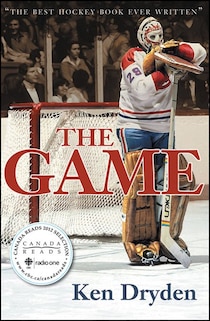
THE GAME

THE GAME


You want to get more than a general feel for hockey? Want to dig into every aspect with a microscope, but, in an easy to read way? This is the book.
Dryden takes what you might think is just a hockey story to a completely new level. To the level of literature, in my opinion.
The writing is amazing...it really is.
Dryden writes from his point of view, the strange view of a goalie. The player who is on the ice the entire game, but, only directly involved in the play for a few minutes. His view is of a much larger scale. He sees the entire game. He has time to think about things. Things outside of hockey too.
The book starts with the day Ken meets with the general manager to confirm he is going to retire at the end of the season. He questions if this is the right move. He wants to move onto something else - being a lawyer. He questions if this is what he really wants. He questions if he is at his peak. How long will this last? He questions his team. The Canadians of the mid 70's, winning three Stanly Cups in a row. Are they becoming to complacent? He questions the toll hockey is taking on his family life and his health. That feeling of uncertainly is not only limited to Ken, he comments on the politics of the time. The uprising of separatism in Quebec and the big question - should Quebec separate from Canada. He even manages to question Canada's place in the world, tieing in hockey with the Cold War.
This wide ranging view, all connecting, is wonderful to read. Educational too. Really, it should have won this years Canada Reads.
On that note, What made me pick up this book was Alan Thicke, you know from Growing Pains? Ya, he's Canadian eh? Well he was championing this book on Canada Reads 2012 and made it sound like a book all Canadians should read. I will back up Alan's arguments. This book gives us an inside look at 'our' national game from someone at the highest level while also providing a broader perspective on Canadian society at the time. There are many pages devoted to play by play hockey moments, but, for the most part Dryden talks about his teammates. The quirks and personalities of the other players are endless. From these descriptions he goes off on small tangents talking about a vast variety of topics; cities, family life, drinking, humour...again, seemingly endless, yet fascinating how easy it was to relate to these 'stars' and their celebrity life. There were also more serious forays into his criticisms of hockey that still seem to be going on thirty years later - the role of fighting, how hockey has been corrupted by big business, and the touchy subject of how Canada is losing it's domination of the sport internationally. On a personal note, I found his discussion on how children were being raised at the time still very very relevant.
He starts off describing Guy Lafleur's creative genius on the ice. How he spent hours just fiddling around with the puck, just like when he was a kid. This let him invent and master new moves to deke out defenseman and score. It brought something new and exciting to the game. But, Dryden comments, nowadays kids are so scheduled with activities such as piano lessons, hockey practice, soccer games, etc. that they do not have the hours of free time to just play outside, to not kick a ball at a tree five hundred ways in an afternoon. That was in the early 80's. I hear the same comments to this very day!
Another theme throughout the book that really came close to home was his work / family life balance. Which would not have been called that back then. He talks about being a ghostly figure in his house from October to June (Hockey season). He is either gone on the road, coming home late from games or traveling home from the road, or sleeping late to get ready for the nights game. He realizes he does not have any genuine interaction with his kids for months at a time. The summers are different, but, for the most part he just accepts it and tries not to feel too guilty.

His brief tangent into his childhood strikes me as being so Canadian, at least little boy Canadian. His backyard had a paved section to it, bordered by fence and gardens...making the ideal 'rink'. It was a little lopsided and on a bit of a hill, but, that didn't stop him and the neighborhood kids from spending every available spare minute playing road hockey with an old tennis ball. His life was school in the day, road hockey at night (and all day Saturday and Sunday). I'm sure there was a bit of hockey card trading thrown in there, but, he didn't mention it.
So, to wrap it up, this book should have won this years Canada Reads...since they were looking for the most Canadian non-fiction book.

RATING: READ

Getting back to my dewey decimal countdown challenge, this book was found in the 700 section of the library. 700's down, now onto 600. I have an environmental book on the go. Sounds exciting eh? It is one of those do-something-for-a-year-and-blog-about-it type of deals. Sleeping Naked is Green, that's the title. Sounding better?

Tuesday, July 31, 2012

RED GREEN TALKS CARS

RED GREEN TALKS CARS - A Love Story


Wow, what an interesting way to approach the cultural issues of masculinity, the power struggles in a marriage, and environmentalism. Red Green takes on these topics and many other deep and all encompassing aspects of life through the symbol of a car. The car seem to be used as the metaphor to delve into deep philosophical arguments, mostly dealing with North American culture. I missed the whole Love Story that was mentioned in the title, but, perhaps that was a narrative too deep for me to catch onto.
Now I see why I found this book in the 'Literature' section of the library, in the same aisle as Shakespeare, Wordworth, and other greats.
I never realized how decisive cars were in determining social class and even moral values. After reading this great philosophical work I feel enlightened...and, a bit lighter (in the physical sense) as well, since at two points I peed my pants - once a full bladder release, the other just a little. In terms an '86 Monte Carlo owner would understand - it was freakin' hilarious man.

Rating : READ

This was my second book in my dewey decimal countdown challenge. It was my 800 section pick. Quick read which helped me get through the intimidating literature section of the dewey decimal system. Now onto 700s...sports.

Friday, July 6, 2012

HIGHLY INAPPROPRIATE TALES FOR YOUNG PEOPLE

Highly Inappropriate Tales for Young People


7 incredibly crude and disturbing tales reminiscent of kids fairy tales but with a modern twist.
I'm sure you've made a comment on how violent and frightening classic fairy tales are. Like those curious kids, Hansel and Gretel, finding a nice candy house only to be thrown in an oven. Or, Little red riding hood, who is hoodwinked by a hungry wolf whose head is eventually chopped off. Right, for some reason these were deemed appropriate for children. Well, the stories in this book are along the same lines but deal with minivans, action figures, and juice boxes instead of witches and wolves. And, as with all modern things sensitivity prevails, hence the title 'inappropriate tales for young people'. Now for adults it's an entirely different story.
These seven tales are a hilarious take on the lives of modern kids. I heard an interview with the author and he commented on how kid's lives nowadays are filled with so much stuff - iphones, juice boxes, toys, toys, toys...then his mind started working, in the strange way his mind works, and he came up with the idea of 'what if these things came alive and turned evil?" Well, this is what would happen.
There is tale of a juice box who's aim in life it to destroy other juice boxes. He punctures their frail tinfoil holes with things. He tricks them into being run over by cars, exploding their insides onto the parking lot. His destructive impulses increase and he takes off into the streets, burning fast food containers on the way.
There is a tale of a terrible babysitter who makes kids shoplift, burn houses down, and walk through cemeteries late at night.
Another extremely violent tale was about a disturbed action figure. He seemed to suffer from PTSD and is living on the streets. A boy stumbles upon him on day and takes him home. The action figure feels trapped in this situation and needs to break out, and take revenge on his kidnapper. The violence brought down on this boy from a tiny plastic action figure is frightening...and slightly disturbing that someone would think about it!
My favourite was 'Kevin, the hobo minivan with extremely low morals'. It hit close to home. We have a minivan, and I cannot imagine it being a low life character who shakes down children and seniors for loose change to feed its addictions.
Overall, the stories were very imaginative and funny. A nice satire of children's fairy tales with modern gadgets and slang thrown in. I did laugh to myself countless times while reading as well as think 'wtf', by the strange twists or outright disturbing violence. It is definitely not a book to read to children right before bed. Perhaps if they are sixteen and the power is out and nobody wants to play monopoly, it would work then.

RATING: READ

Friday, June 22, 2012

SHATNER RULES

SHATNER RULES
Your Key to Understanding the SHATNERVERSE and the world at large


Make sure you do not ever yell, 'beam me up Scotty' to Shatner, if for some reason you see him in real life. Why? Because, he will tell you to F*** off!
Yes, just one of the many interesting tidbits of info Shatner reveals in his book Shatner Rules.
Somehow, Shatner's arrogant, crass, egotistical writing comes across as endearing. Why? Because, he reveals just enough of his 'real' personality to let you know it's all an act. He has created this 'William Shatner' persona that he 'plays' while doing interviews, attending conferences, or being roasted on Comedy Central. Bill, his real person, is much humbler and laid back with a focus on friends and family. Just another interesting thing that is revealed in this book.
Shatner rules is a hilarious, very very witty book outlining Shatner's philosophy on the success of his career. He calls it a memoir. I call it a laugh along satire of a self-help-life-consultant-autobiographical-career-building book WITH a bunch of Star Trek references peppering the pages.
Along with the Star Trek jokes, there are odd life stories such as the time Shatner sold his kidney stones for $75,000 - the money went to charity (ahh, how nice). There are tales of his music career; from trippy hippy ballads in the late 60's to his heavy metal scream fests he recorded at the ripe old age of 70 something! His vast and varied life and career experiences are made up a series of strange happenings. He attributes this all back to his number one rule - say 'yes'! Yes, opens doors which lead to more doors, with lead to more doors, an underground tunnel, a bridge, a window, etc...in other words, one thing leads to another and soon you find yourself headlining Sci-fi conventions, award ceremonies, TV shows, Records...
That's a rundown of the narrative. Now, what makes this book entertaining to read is the tone and attitude Bill puts into each page. It is chock full of jabs at those who mock him, especially his Star Trek career, and he totally takes ownership of those jokes. He mocks the mockers. It is hilarious, 'nuff said. Along with this mockery of the mockers, is a consistent joke about the William Shatner Brand where he encourages you to YouTube him doing this or that, or buy an audio version of his book (with his voice over), or just becoming another one of his multi million followers on Twitter.
Then there is the chapter on technology. I love when 'old' people talk tech. Apparently Shatner had a facebook account which was deleted because it was thought to be a fraud. Ouch. So, Shatner went to the Twittersphere and worked his magic there. I haven't checked out his account yet, but, I'm sure it's very good. And, good on him for going on the internet at such a ripe age.
You do not have to be a Star Trek fan to like this book, you just have to like a good sarcastic wit...and piles of egotistical references to The Universe According To Shatner.

This is the second Shatner book I've read and the difference is like night and day, human and Klingon, Warp speed and Mach 1...the last book was a serious Star Trek novel, this one (an equally fantasy filled adventure) a funny memoir. Both were excellent. Proving my point that Shatner is a good writer. He seems to do everything good. In some people's eyes he is a god...I wouldn't go that far, but, possibly admit I would seek his help as a life guide (I think Opera uses life guides or counsellors or something just as ridiculous).
Oh, and apparently he charges $75 for an autograph and a maximum ten second 'chat' at those Star Trek conventions.

RATING: READ READ READ

Tuesday, May 22, 2012

TOUGH GUY

TOUGH GUY!


I know Bob Probert, not in the literary sense, but in the hockey world. He was big when I was a pre-teen  and followed hockey religiously, even the fighting side. Bob Probert was the ultimate enforcer of the time. Which is why I was a bit surprised to see his name on this book, as the author. Then I saw the fine print, with help from Kristie McLelland Day. Then I though, what kind of story would Bob have to tell. A few fisticuffs tales? Then I remembered, the off ice antics; the suspensions for drugs, the car accidents...maybe there was a bit more of a story here? And, with all the hype recently about the problems these enforcers face (drugs, suicide, brain damage, etc) I thought I'd give the book a try.
Tough Guy was tough - a tough read. The way the book is written feels like a direct transcript from an interview Bob is giving. I'll remind you, Bob was a high school drop out who made his NHL career by punching people out and getting a few whacks to the head himself (every few days for a decade!), hence, the narrative was a little unfocused at times. However, the overall story made up for it.
The book is a chronological account of Bob's life focusing on his hockey career. It starts out sounding like a typical hockey star's beginning - success in the early years, drafted into a junior club, drafted by an NHL team. There was not much difference with Bob, only he was always bigger than the other kids and used his long arms to his advantage in a fight. That, along with some good hands (he put up some pretty good points) made him catch the scout's eye.
Off ice, he was not as successful in school, and liked to party...a lot. He dropped out of high school, not that he attended much anyway, and spent his time playing hockey and drinking with buddies. That's pretty much how he spends the next twenty years of his life.
The main chunk of the book are stories of incidents Bob has with drugs and drinking. Things like, car accidents while drunk driving, the use of drugs, the suspensions from hockey for drug use, the countless rehab visits, and a few of the sober moments. The hockey stories take a backseat. He recounts the many players he was teammates with (mostly the ones he partied with), the successes he had in the peak years, and a few of the more interesting fights he had.
He ends it with the last part of his life, where he has sobered up and put time and effort into his family.

It was like a journey back to the 'glory years' for both Bob and me. He played at a time where I knew all the players. So, his name dropping was like candy to me - Yzerman, Gilmour, Gretzky, Federov...
The game has changed dramatically since then. Fighting is not as encouraged now as it used to be. Drug use now is almost unheard of and those that do get some major 'help'. Probert comments on the players now, how they are so much faster and bigger. There would be little chance of someone with mediocre talent, even with some big fists, to make it into the league today. It was interesting to get a behind the scenes look into this game...I wonder if they still party as hard now as they used to.

Rating: Read

Monday, May 14, 2012

THE ASHES OF EDEN

The Ashes of Eden


Shatner seems to be great at everything eh? A famous actor, apparently a musician, a producer, and (I'll attest to this) a decent writer. Oh, those crazy Canadians.
I took this book out of the library, mostly because I was looking for an easy read and Star Trek books usually meet that requirement. I'd compare them to the Western or the Harlequin Romance of the Sci-Fi section. This book seemed no different from the rest of this niche genre when I started it, you had what looked like a fairly straight forward Star Trek plot. By that, I mean Kirk falls for a breathtakingly beautiful alien being (in a tight jumpsuit), he almost gets killed yet manages to take on a couple of much stronger beings with lasers, then accepts a near impossible mission. Doesn't seem that hard to write eh?
But, there are a few twists which Shatner works into the book to create some wonderful mystery and suspense. You think it's a going to be one of those standard template stories where you know who is the enemy, who is going to die, what the mission is, and therefore, how it's going to end. Well, don't count on those things in this book.
The first deviation in this book is the initial setting. It's placed at a time when the original crew (Kirk, Spock, McCoy, Scotty, etc) are getting to retirement age. Kirk is not an active captain, not working on a ship, not doing anything worthwhile which makes him feel useless. He's depressed, even slightly desperate, and looking for an out. Being the famous Capt Kirk, trouble comes looking for him. When offered a chance to live an everlasting life with a hottie alien he jumps on board...the Enterprise.
Yes, I said, Enterprise! It's been recommissioned with the help of the new love of Kirk's life.
On the other side, a thorn in Kirk's side (some rival from the early days) is promoted to Admiral in charge of all Star Fleet. Of course, this rival has been planning on taking out Kirk for about thirty years, so, when his chance comes he goes for Kirk - his reputation, his former crew, and his life.
Loyalties are tested, motivations are questioned, the fate of the Federation is at stake...so, again, your typical Star Trek plot.
I'll leave out the ending, but, you can probably guess Kirk prevails.

I was not a big fan of the original Star Trek, I've only watched a handful of episodes. I was more of a TNG and Voyageur fan. But, the writing of this book was so good I did not feel I was grasping for character recognition. I got the gist of who Bones was or Chenkov, even though I don't know them as well as a Riker or a Worf. Shatner surprised me in how well the story flowed, how well the words flowed. There was no awkward phrasing or anything glaring bad writer.

Rating: Read

*Today on the radio there was a story about a comic book convention. Shatner was to appear and give autographs. The catch - fans had to pay $75 for the privilege of a ten second conversation and a signed photo! The impress factor dipped drastically after hearing that!

Tuesday, April 10, 2012

Cool Water

COOL WATER


I read this book because it won an award, the Governor General's Award in 2010. My challenge this month is to read award winning books, so this one fit the bill. I thought I'd take a stab at something out of my typical genres. It was ok, but, I'm just a bit surprised this book won such a prestigious award. It is a good book, but, I didn't find it outstanding - or in my opinion award-worthy. The actual writing was ok; clear, concise, and beautifully descriptive. But, for me, the story lacked any real movement. I felt like I read an entire book and the characters only took one step forward. Maybe I'm just used to a faster paced tale where in a few hundred pages the characters move thousands, even millions of steps. Maybe the story was deeper than I realized? There seemed to be a lot of references to sand and water, how they constantly shift and change the landscape. Therefore, I'll chalk this up as a good book, but, I'm too ignorant to really appreciate it.
What I did connect with was the setting and landscape in the book. Set in Saskatchewan I can picture the exact locations Warren describes. Having lived there when I was young I recall the trips out to the middle of nowhere, the 'desert', where some of the story takes place. I can picture the tumbleweeds sticking to the barbed wire fences, the sand dunes, and the coulees that seem to be the only place on the plain that grow trees. As for the small town, the cafe, and the main street I picture the TV show Corner Gas.
As for the actual story, I had a hard time connecting with it. A few dysfunctional relationships/people that seem to go nowhere. They just seem to sit there and ponder their situations until something dramatic happens like a sudden death or a runaway child. Even with those extreme situations I didn't find myself getting excited or more interested in the story or characters...I kind of just wanted it to end. Again, I need a bit of action.
Overall, this foray out of my 'comfort' zone did not pay off. Oh well, maybe next time.

Rating: Do Not Read.

Wednesday, February 22, 2012

RED GREEN'S DUCT TAPE IS NOT ENOUGH

Duct Tape Is Not Enough


If you follow the Canadian literary scene you will be well aware that CBC's Canada Reads just finished. This years winner: Something Fierce by Carmen Aguirre. The debate was about which books was more Canadian. Which got me thinking about Canadian literature and how I could add some more to my diet of books.

I was reading Duct Tape Is Not Enough at the time, coincidentally, which happens to be written by a Canadian. Although the book was not necessarily about Canada or Canadian culture it was funny...which I believe is a Canadian trait?


I found the format of this book great to read during a true Canadian winter. The short one page stories are wonderful to read while busy doing typical Canadian things:


-While waiting for snow tires to be put on your car at Canadian Tire. You know you are going to be interrupted many times because they'll find more things that need fixing and replacing


-While waiting in the Tim Horton's drive thru line on a Sunday morning just as the church next door lets it's worshippers out.


-While ice fishing


-While riding as a passenger on a snowmobile (in some case even the driver, like while crossing a frozen lake)


-While curling


-While playing goalie in your Sr Men's Rec league on Weds nights


This is an easy, Canadian, book that can fit into your life - especially if you are feeling you need to add a bit more Canadian content. I found it easy to relate to, which is of some concern to me, and very funny. This one did not contain the patented handyman humour/disaster stories. No, this book was more of a guide to life, midlife. There was a lot of 'old guy' jokes and just humourous commentary on getting on in life. There was a disturbing theme veiled under all fo these jokes though. A constant repetition about being a failure in life, amounting to nothing, not being able to follow simple social etiquette even at a ripe old age...but, it's ok b/c most men turn out this way. Haha, so true, which makes it all the more funny.

Another great installment by Steve Smith.


RATING: READ

Thursday, January 5, 2012

How To Do Everything

How to do Everything


- Steve Smith (aka Red Green) -


I'm on a humour streak, this is the third in a row and by far the funniest. This whole Red Green thing; the duct tape jokes, the terrible handyman stories, and the 'man' views of life's little moments, are all starting to make sense to me. I can finally relate! It's only taken thirty years. With all this life experience under my belt I can relate, which leads to laugh after laugh. I'd say this book is aimed more towards the middle aged man, but, I'm mature for my age...guess that's why I find the underwear jokes so funny?

The book had no storyline. No plot. No real structure of any kind. It is made up of short stories (some no longer than a paragraph), lists of all kinds (mostly relating to handyman screw ups), and a few highlighted boxes filled with handyman tips. So, perfect for the reader who only has a few minutes to waste, or a two minute attention span. In other words, men. Haha, I've just given away half the punchlines in the book.

Now, when I say this book is funny I mean it. I'll give you a play by play of me reading it. *Turn page. Read. Chuckle. Read. Quietly laugh. Read. Snort. Turn page. Read. Giggle. Get funny look from Jen. Read. Laugh and say, "ain't that the truth". Get told to keep it down. Turn page. Read. Stifle Laugh. Get the look again. Turn page. Have to leave the room to laugh.*

Seriously, this book will bring laughs to you and annoyance to those around you. It's that good!


RATING: Read